Saturday, 10 November 2012

Women artists and their men

Just watched a short extract of a film about Lucien Freud, fascinating:
http://www.nowness.com/day/2010/2/26/376/the-god-of-small-things
Small Gestures in Bare Rooms was a film made by Tim Meara about the artist in his later years.   The artist's studio was reconstructed; it includes Celia Paul, one of Freud's models and lovers, who currently has an exhibition at the Pallant House Gallery, Chichester, until 27th January. This is of both her work, and the work of Gwen John, another female artist whose work was overshadowed by the famous male in her life: she was Augustus John's older sister.  The exhibition is called Painters in Parallel, and there is certainly something very similar about the styles of the two women (Gwen John's work is on the left above)with their muted colours and quiet scenes.

Forwards and Upwards

The first non-stop transatlantic flight was flown in Burberry -
 by British aviators Alcock and Brown in June 1919.

     Roald Amundsen conquered the South Pole also wearing Burberry, in December 1911.

The company was founded in 1826 when Thomas Burberry, aged only 21, opened a store in Basingstoke, Hampshire.By 1870 the business had established itself by concentrating on outdoor wear, introducing in 1880 the gaberdine, hard-wearing, water-resistant yet breathable.

 In 1901 the equestrian knight logo was registered - containing the Latin word Prorsum, or Forwards; ten years later they became outfitters for Amundsen, plus Ernest Shackleton, who led a 1914 expedition across Antarctica. However a Burberry gaberdine was also worn by George Mallory for his unsuccessful attempt on Mount Everest.

More recently it has been modelled by Kate Moss, Agyness Deyn and Emma Watson.

Of Birds and Men

Had a brilliant meeting of the Waveney and Blyth Valley Arts today. Three excellent speakers, including the dynamic Laurence Edwards with the tale of his Creek Men, which finally explained to me why they are no longer at Snape, what a loss, but luckily they are apparently now at Heveningham.
http://laurenceedwardssculpture.com
Laurence Edwards and his creek men sculptures  Also speaking was Mark Cocker, whose 'Birds and People' is an internet forum for people around the world to contribute their experiences with our 'feathered friends', resulting in a book of the condensed details.
 Also, Peter Cowdrey  gave us a demonstration  of the way technology can help us understand the musicality and patterns in birdsong.
http://www.operaunlimited.org.uk/theconferenceofbirds.htmlAlso, heard a sneak preview of the Translation Through Reeds recording - fab!!

Thursday, 8 November 2012

T shirts r us

The modern T-shirt had humble beginnings. A union suit was a one-piece item of underwear, originally designed in the U.S. for women, made of red flannel, with long arms and legs, as an alternative to the restricting garments previously worn, patented as 'emancipation union under flannel' in 1868. It was still worn into the 20th Century, but was gradually becoming menswear, and replaced by two garments, long johns and the precursor of the T-shirt.      Miners and stevedores wore T-shirts for their hot working conditions from the 19th century; they were issued by the US navy for wearing as an undergarment during the Spanish American war in 1898. It was soon popular as a bottom layer for many types of workers, including agricultural, particularly for young boys.

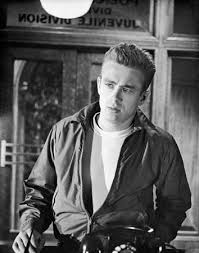
By the 1920s T-shirt was a term in the American/English dictionary. By the Great Depression it was the usual attire for farm work. After WW2 it was common to see veterans wearing t-shirts with uniform trousers, and after 'A Streetcar named Desire' 1951 starring Brando, and 'Rebel without a Cause' 1955 starring James Dean, they became a fashion item. Elvis and others added to their popularity.
In the early 1950s companies in Miami began to produce shirts with characters and resort names. Tropic Togs produced Disney characters.

In the sixties tie-dye and screen-printing became popular, with political messages, and pictures of Che Guevara, plus bands. In 1961 a surfboard maker, Floyd Smith, made possibly the first surfing T-shirt. Local surfers took him their white T-shirts for screen-printing.

 Musicians also began using the T-shirt as a marketing tool, selling them at concerts with their images and slogans. (The very oldest slogan T-shirt said 'Dew it for Dewey', to promote Thomas Dewey's bid to become president in the fifties -one is exhibited at the Smithsonian Institute.) The ringer T-shirt appeared in the sixties, with a different colour collar, popular among rock and roll fans, most frequently a black collar on a white T.

In the eighties white t-shirts became popular after Don Johnson wore his under an Armani suit in Miami Vice; designer-name logos were used as part of advertising campaigns.

Today over 300million surfing T-shirts are produced around the globe. T-shirts are ubiquitous, worn by almost everyone, almost everywhere.

Recently, Susan A. Barnett photographed people in T- shirts - from rear view - in a project called 'Not in Your Face'. On her web site-she says 
'Each one of these people reveal a part of themselves that advertises their hopes, ideals, likes, dislikes, political views, and personal mantras.
By photographing from the back I attempt to challenge the time-honored tradition of the portrait being of the face and test whether body type, dress and demeanor can tell us just as much as a facial expression might.'
http://notinyourface.com/about.html


So what's written on your T shirts?

Tuesday, 6 November 2012

Bourne again: Sleeping Beauty

In December, Matthew Bourne celebrates 25 years of his company, the New Adventures, with Perrault's Sleeping Beauty, decribed as the gothic romance of a young girl who sleeps for a hundred years then awakes to the modern world. It's the third of his Tchaikovsky ballets, the first being his Nutcracker! in1992, the second his most famous , 'Swan Lake', with the all male corps de ballet. The original Sleeping Beauty was choreographed by Marius Petipa in 1890; this is the year Bourne begins with for Aurora's christening. Bourne has used three of his regular collaborators, including the award-winning Les Brotherston (set and costumes).

Although I have loved seeing many of his ballets, my favourite is still Swan Lake, internationally famed not only for its own tours, but also for the 'cameo appearance' it makes at the end of the film Billy Elliot, with the original lead Adam Cooper playing a grown up Billy about to go on stage for the Bourne production.( Adam Cooper is currently starring in Singing in the Rain, in Shaftesbury Avenue.)

In Swan Lake the Tchaikovsky music is danced to riotously in the bar, which with Bourne's distinctive choreography takes on the atmosphere of a Toulouse Lautrec painting, even if the costumes are more of a strange mish-mash of fifities and sixties. This contrasts with the dance at the palace, which is invaded by characters from the other world.  The court also goes to the theatre, so you see  dances within a dance, this last one a comic pastiche of  ballet.                        

Other Bourne productions I have seen include Edward Scissorhands, which stayed very close to the Tim Burton, Johnny Depp film.

The Nutcracker! was a frothy and exhuberant  Christmas entertainment, and well suited to introducing people who don't normally go to ballet to the world of dance, though as far as spectacular dancing it wasn't the best production, though it has a Busby Berkley style effervescence.

'Play without words' was based on the 1963 film, 'The Servant', Harold Pinter's adaptation of a 1948 novelette, starring Dirk Bogarde and James Fox, where the servant/master roles are gradually reversed. In the dance production, Bourne  shows the story unfolding with three versions of each character and multi-sets within the set.               

Finally, 'Car Man', set to the music of Bizet's Carmen, loosely based on 'The Postman Always Rings Twice'. Here it's the small town that's sleepy, woken up by a visiting drifter, Luca.

Sunday, 4 November 2012

Translation through Reeds recorded

The most recent choir I've been in has had a fantastic day today recording the piece of work we performed in the summer, Translation through Reeds, which is about the local countryside around the rivers Waveney and Blyth, composed by Karen Wimhurst using the specially commissioned poetry of Joanne Guthrie. So we spent the whole day in a church in deepest Norfolk, having to wait when the odd car went past, working incredibly hard, but am looking forward to hearing the result. Conducted by Sian Croose, who had also taught us the piece, accompanied by Karen on bass clarinet and piano, we were also joined by the soloist Sianed Jones. It's been a full weekend of singing as Saturday evening I also went to see Sianed performing at the Halesworth Cut, singing wonderfully plus playing a mean fiddle, supported by Sian and a young guitarist cum tamboura player, Adrian Lever. Sian and Sianed often perform together as part of Human Voices, who I've seen several times and are absolutely brilliant, acapella, but not as you know it!! Sianed has a new cd out,  'Flickering into Existence'.

Thurston Hopkins

Thurston Hopkins and his wife Grace Robertson were both photographers on Picture Post in the years after the war when the magazine  was helping create a new sense of national identity.
The young Hopkins had originally gone to Brighton College of Art, and had worked for a publisher making decorative frames for pictures of Edward VIII until he abdicated, leaving Hopkins without a job! Hopkins joined the PhotoPressAgency on the advice of his employers, who told him he could make more money with photography.
He was in the RAF Photographic Unit during the war, and managed to get a job with Picture Post in 1950. One of his first essays for them was Cats of London (1951) - many cats had been made homeless by the Blitz and were living and breeding in the bombsites.
Later he set up a studio in Chiswick, and taught photography at the Guildhall School of Art. Since retiring he leaves the photography to Grace Roberts, nowadays mainly painting.